Running a Blockchain Node vs. RPC SaaS vs. High-Level APIs
Comparative analysis of three primary methods for interacting with blockchain networks: running a full blockchain node, utilizing Blockchain RPC SaaS, and leveraging high-level APIs. We will explore the advantages and disadvantages of each approach, considering factors such as cost, complexity, control, security, and scalability, to help developers and organizations choose the most suitable method for their specific needs.

David Liu
Blockchain
10 Minutes
Comparative analysis of three primary methods for interacting with blockchain networks: running a full blockchain node, utilizing Blockchain RPC SaaS, and leveraging high-level APIs. We will explore the advantages and disadvantages of each approach, considering factors such as cost, complexity, control, security, and scalability, to help developers and organizations choose the most suitable method for their specific needs.
Running a Full Blockchain Node
Running a full blockchain node involves downloading and maintaining a complete copy of the blockchain's history. This allows for direct interaction with the network without relying on intermediaries.
Advantages:
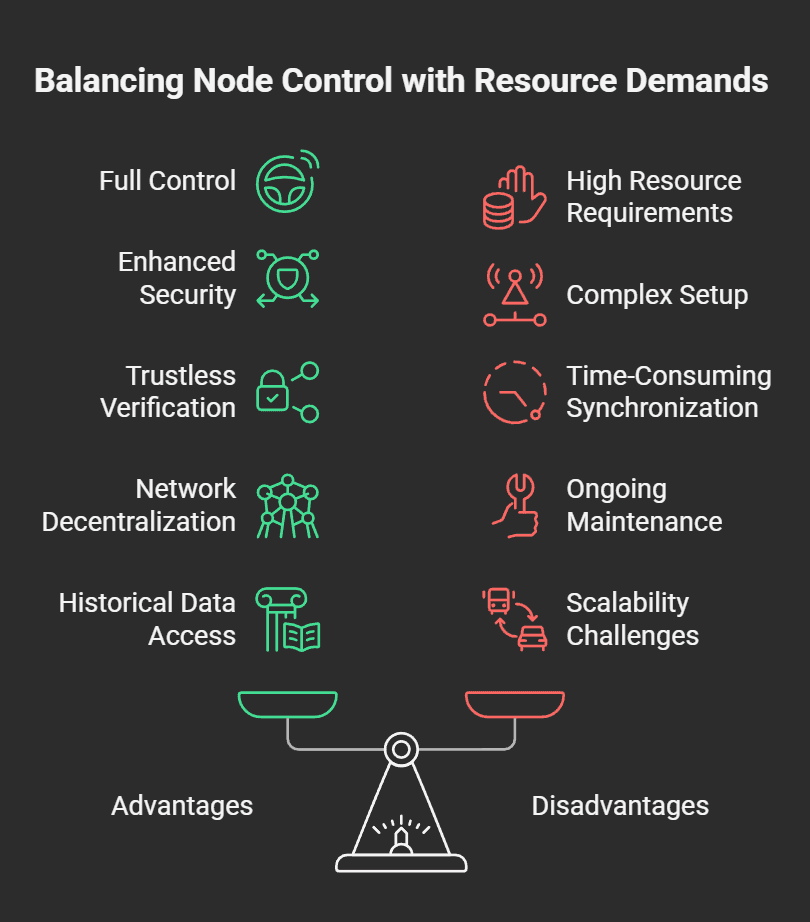
Full Control: You have complete control over your data and how you interact with the blockchain. You are not dependent on third-party services.
Enhanced Security and Privacy: You are not sharing your data or queries with external providers, reducing the risk of data breaches or censorship.
Trustless Verification: You can independently verify the validity of transactions and blocks, ensuring data integrity.
Contribution to Network Decentralization: Running a node helps strengthen the blockchain network by increasing the number of participants and improving its resilience.
Access to Historical Data: You have direct access to the entire blockchain history, which can be valuable for in-depth analysis and auditing.
Disadvantages:
High Resource Requirements: Running a full node requires significant storage space, processing power, and network bandwidth. The hardware costs can be substantial, especially for blockchains with large histories.
Complex Setup and Maintenance: Setting up and maintaining a node can be technically challenging, requiring expertise in blockchain technology, networking, and system administration.
Time-Consuming Synchronization: Initial synchronization with the blockchain can take days or even weeks, depending on the size of the blockchain and your network connection.
Ongoing Maintenance: Nodes require regular updates and maintenance to stay synchronized with the network and address security vulnerabilities.
Scalability Challenges: Scaling a node to handle high transaction volumes can be difficult and expensive.
Use Cases:
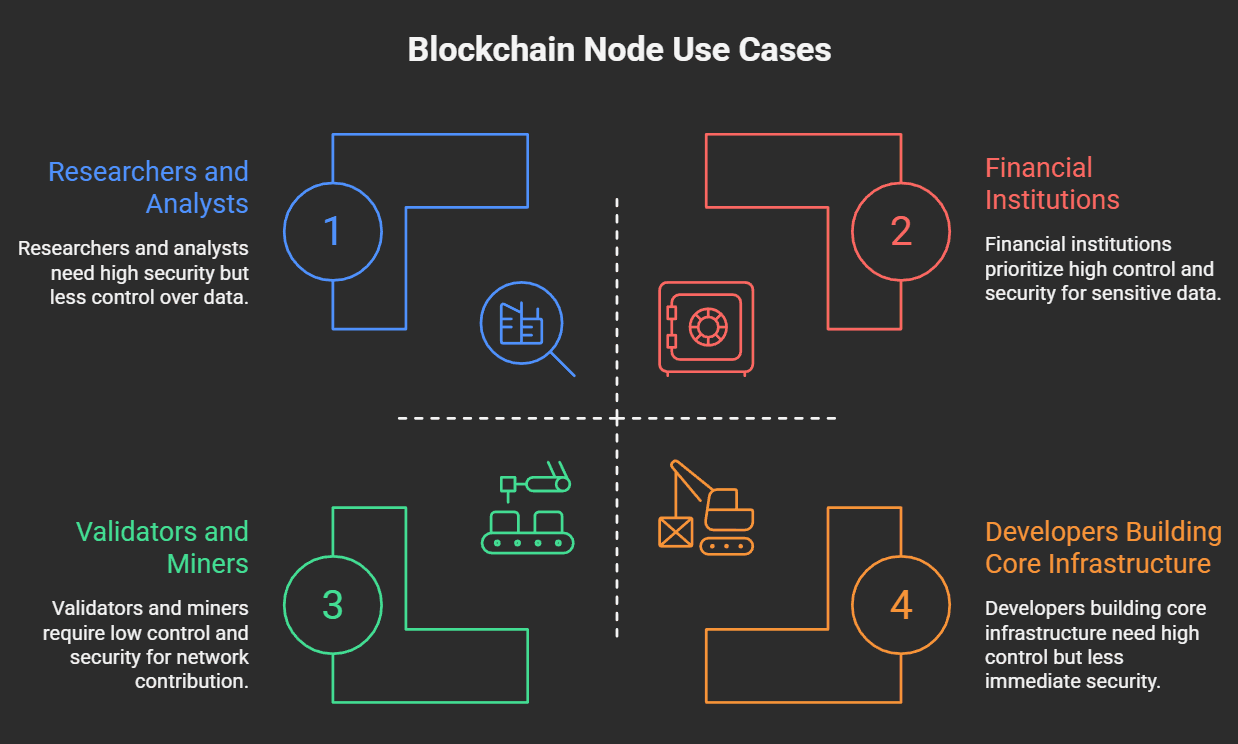
Enterprises requiring maximum control and security: Financial institutions, exchanges, and other organizations that handle sensitive data and require strict compliance.
Developers building core blockchain infrastructure: Those working on blockchain protocols, wallets, and other fundamental tools.
Researchers and analysts: Individuals or organizations that need direct access to historical blockchain data for research purposes.
Validators and miners: Participants who actively contribute to the consensus mechanism of the blockchain.
Blockchain RPC SaaS
Blockchain RPC SaaS providers offer access to blockchain networks through a managed API. They handle the complexities of running and maintaining nodes, allowing developers to focus on building applications.
Advantages:
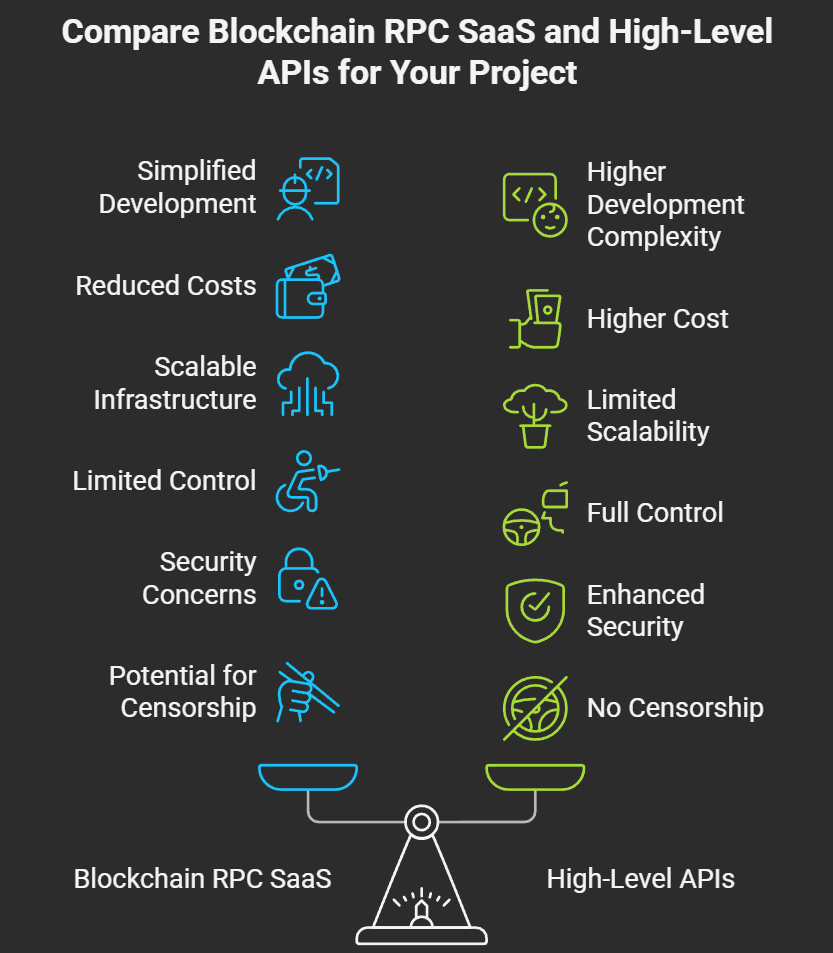
Simplified Development: Developers can easily integrate blockchain functionality into their applications without managing infrastructure.
Reduced Costs: Eliminates the need for expensive hardware and dedicated IT staff. Pay-as-you-go pricing models can be cost-effective for many use cases.
Scalability: RPC SaaS providers typically offer scalable infrastructure that can handle high transaction volumes.
Reliability and Uptime: Reputable providers offer high availability and uptime guarantees, ensuring that applications remain operational.
Faster Time to Market: Developers can quickly prototype and deploy blockchain applications without the overhead of managing nodes.
Disadvantages:
Dependency on Third-Party Providers: You are reliant on the provider's infrastructure and services. Outages or service disruptions can impact your application.
Security Concerns: You are trusting the provider to securely manage your data and queries. Data breaches or security vulnerabilities can expose your information.
Limited Control: You have less control over the underlying infrastructure and network configuration.
Potential for Censorship: The provider may have the ability to censor or restrict access to certain transactions or data.
Cost Considerations: While pay-as-you-go models can be cost-effective, high transaction volumes can lead to significant expenses.
Use Cases:
Startups and small businesses: Organizations with limited resources that need to quickly integrate blockchain functionality into their applications.
Developers building decentralized applications (dApps): Those who want to focus on application logic rather than infrastructure management.
Projects requiring scalability and reliability: Applications that need to handle high transaction volumes and maintain high availability.
Applications that don't require full control or trustless verification: Use cases where the benefits of simplified development and reduced costs outweigh the risks of relying on a third-party provider.

High-Level APIs
High-level APIs provide an abstraction layer on top of blockchain networks, offering simplified interfaces for common tasks. These APIs often handle complex operations such as transaction creation, signing, and broadcasting, making it easier for developers to interact with the blockchain.
Advantages:
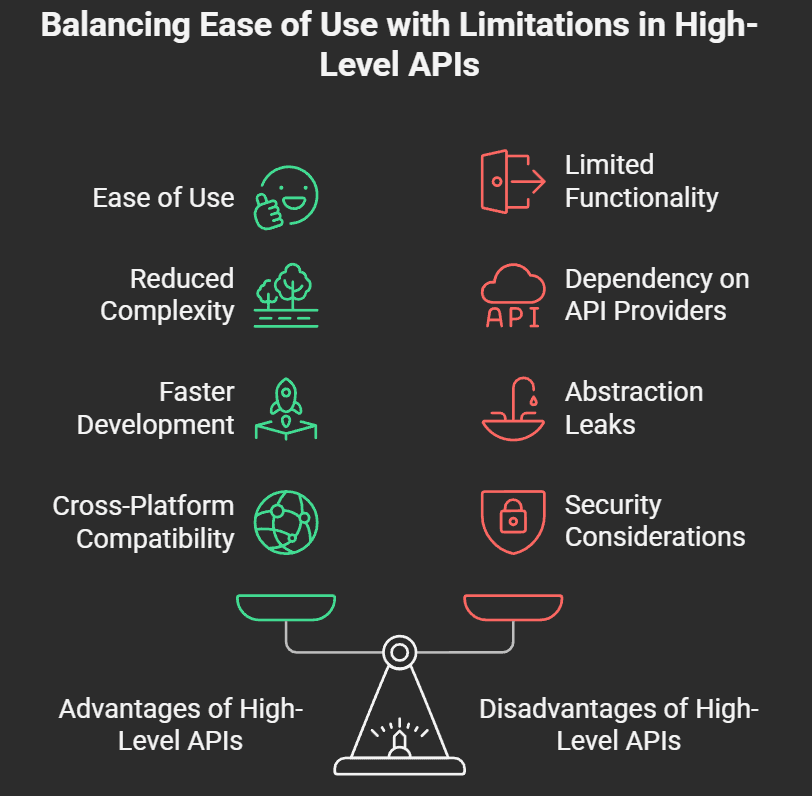
Ease of Use: High-level APIs are designed to be user-friendly, with intuitive interfaces and clear documentation.
Reduced Complexity: They abstract away the complexities of blockchain protocols, allowing developers to focus on application logic.
Faster Development: Developers can quickly build blockchain applications using pre-built functions and components.
Cross-Platform Compatibility: Many high-level APIs support multiple blockchain networks, allowing developers to build applications that can interact with different blockchains.
Abstraction of Underlying Infrastructure: Developers don't need to worry about the specifics of the underlying blockchain infrastructure.
Disadvantages:
Limited Functionality: High-level APIs may not expose all the features and functionalities of the underlying blockchain.
Dependency on API Providers: You are reliant on the API provider's services and updates.
Potential for Abstraction Leaks: Developers may need to understand the underlying blockchain concepts to effectively use the API.
Security Considerations: You are trusting the API provider to securely handle your data and transactions.
Cost: Some high-level APIs may have associated costs, especially for commercial use.
Use Cases:
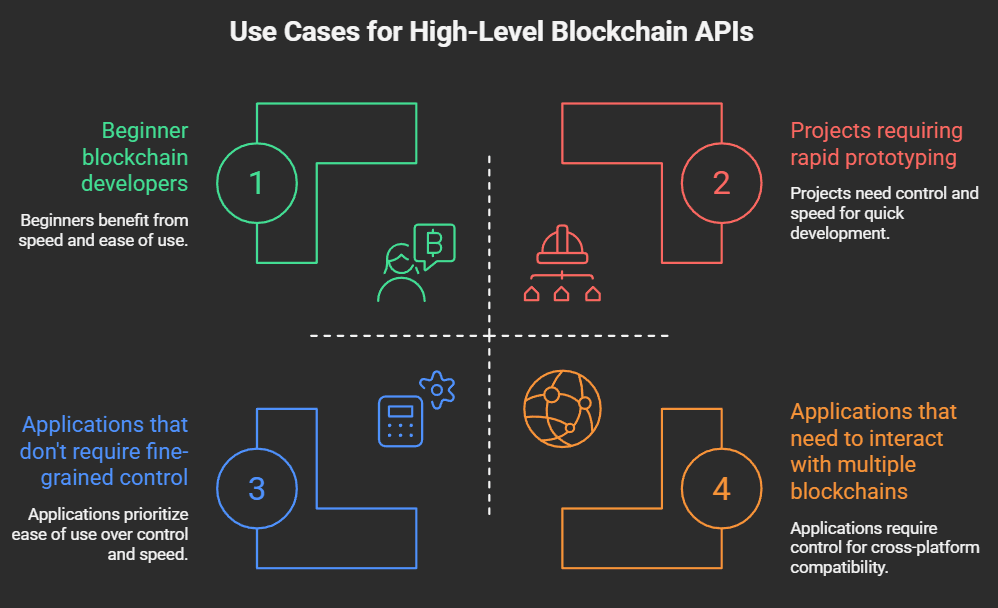
Beginner blockchain developers: Those who are new to blockchain technology and want to quickly get started building applications.
Projects requiring rapid prototyping: Applications that need to be quickly developed and tested.
Applications that don't require fine-grained control: Use cases where the benefits of ease of use and faster development outweigh the limitations of the API.
Applications that need to interact with multiple blockchains: Projects that require cross-platform compatibility.
Conclusion
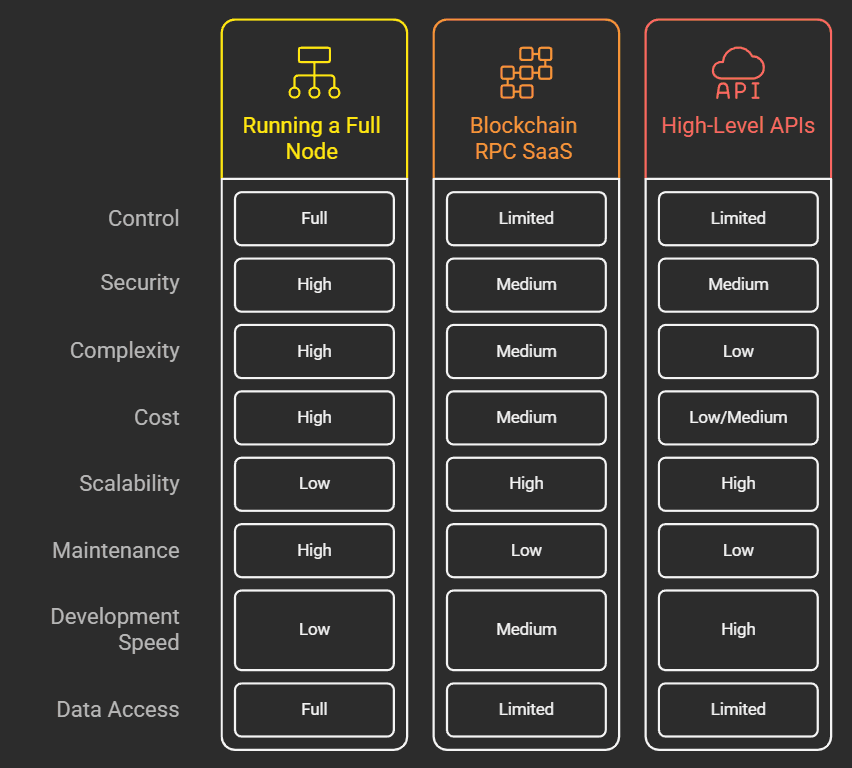
The choice between running a full blockchain node, using Blockchain RPC SaaS, and leveraging high-level APIs depends on the specific requirements of your project. Running a full node offers maximum control and security but requires significant resources and expertise. Blockchain RPC SaaS provides a balance between control and convenience, allowing developers to focus on application logic while relying on a third-party provider for infrastructure management. High-level APIs offer the simplest and fastest way to build blockchain applications, but they may have limitations in terms of functionality and control. Carefully consider the advantages and disadvantages of each approach to determine the most suitable method for your needs.