Web3 Transaction Broadcasting
Exploration of transaction broadcasting in the Web3 ecosystem. It delves into the process of how transactions are propagated across the network, the role of nodes and miners/validators, and the various strategies and considerations involved in ensuring successful and timely transaction confirmation.

David Liu
Blockchain
5 Minutes
Exploration of transaction broadcasting in the Web3 ecosystem. It delves into the process of how transactions are propagated across the network, the role of nodes and miners/validators, and the various strategies and considerations involved in ensuring successful and timely transaction confirmation. We will cover topics such as transaction pools (mempools), gas fees, transaction prioritization, and potential challenges like transaction delays and network congestion.
Understanding Web3 Transactions
Before diving into broadcasting, it's crucial to understand what constitutes a Web3 transaction. In essence, a transaction is a signed data package that represents a state change on a blockchain. This could involve transferring cryptocurrency, deploying a smart contract, interacting with an existing smart contract, or any other operation that modifies the blockchain's state.
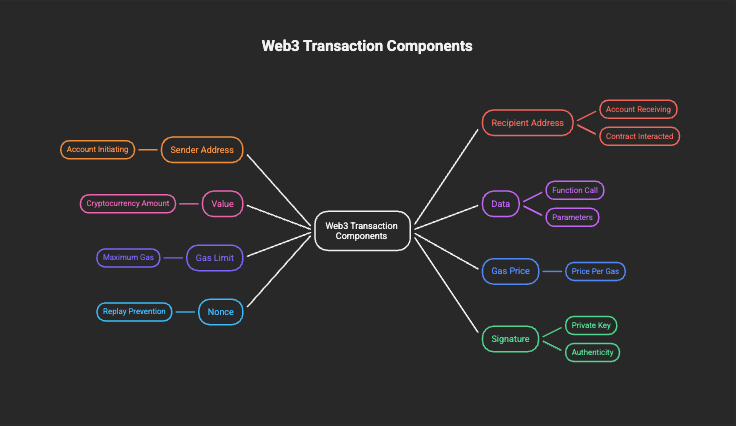
Key components of a transaction include:
Sender Address: The address of the account initiating the transaction.
Recipient Address: The address of the account receiving the transaction (or the contract being interacted with).
Value: The amount of cryptocurrency being transferred (if applicable).
Data: Arbitrary data associated with the transaction, often used to specify the function to call in a smart contract and its parameters.
Gas Limit: The maximum amount of gas the sender is willing to spend on executing the transaction.
Gas Price: The price per unit of gas the sender is willing to pay.
Nonce: A sequential number that prevents replay attacks.
Signature: A cryptographic signature generated using the sender's private key, verifying the transaction's authenticity and authorization.
The Transaction Broadcasting Process
Transaction broadcasting is the process of disseminating a signed transaction to the blockchain network so that it can be included in a block and permanently recorded on the chain. This process involves several key steps:
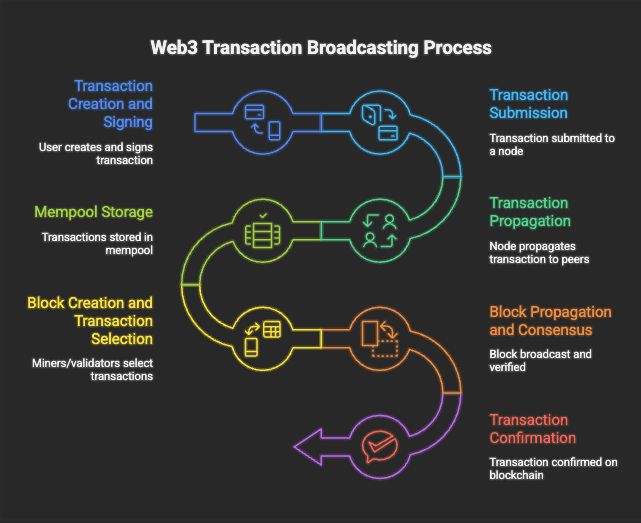
Transaction Creation and Signing: The user (or their wallet) creates a transaction with the necessary parameters and signs it using their private key. This signature proves the user's authorization to execute the transaction.
Transaction Submission: The signed transaction is then submitted to a node on the blockchain network. This node can be a locally run node, a node provided by a service like Infura or Alchemy, or a node operated by a cryptocurrency exchange.
Transaction Propagation: The receiving node validates the transaction to ensure it is well-formed, the signature is valid, and the sender has sufficient funds to cover the transaction cost (gas). If the transaction is valid, the node propagates it to its peer nodes on the network. This propagation continues until the transaction reaches a significant portion of the network.
Mempool Storage: Each node maintains a local "mempool" (memory pool), which is a temporary holding area for unconfirmed transactions. Nodes store the received transactions in their mempool, waiting for them to be included in a block.
Block Creation and Transaction Selection: Miners (in Proof-of-Work systems like Bitcoin) or validators (in Proof-of-Stake systems like Ethereum 2.0) select transactions from their mempool to include in a new block. They prioritize transactions based on the gas price offered, as they are incentivized to include transactions that will earn them the most fees.
Block Propagation and Consensus: Once a miner/validator creates a new block, they broadcast it to the network. Other nodes verify the block's validity, including the validity of the transactions it contains. If the block is valid, nodes add it to their copy of the blockchain. This process relies on a consensus mechanism (e.g., Proof-of-Work or Proof-of-Stake) to ensure that all nodes agree on the state of the blockchain.
Transaction Confirmation: Once a transaction is included in a block that has been added to the blockchain, the transaction is considered confirmed. The more blocks that are built on top of the block containing the transaction (i.e., the more "confirmations" the transaction has), the more secure and irreversible the transaction becomes.
The Role of Gas Fees
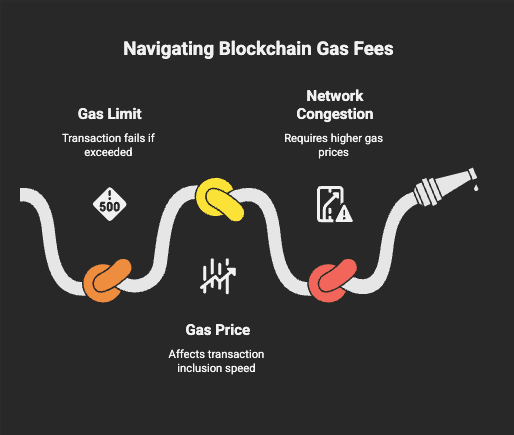
Gas fees are a crucial aspect of transaction broadcasting. They represent the cost of executing a transaction on the blockchain. Users specify a gas limit and a gas price when creating a transaction.
Gas Limit: The maximum amount of gas the sender is willing to spend. If the transaction requires more gas than the limit, the transaction will fail, and the sender will still pay the gas used up to the limit.
Gas Price: The price per unit of gas the sender is willing to pay. Miners/validators prioritize transactions with higher gas prices, as they earn more fees from them.
The gas price is typically denominated in Gwei (a unit of Ether, where 1 Ether = 1 billion Gwei). The appropriate gas price to use depends on the current network congestion. During periods of high demand, users may need to increase their gas price to ensure their transaction is included in a block in a timely manner.
Transaction Prioritization Strategies
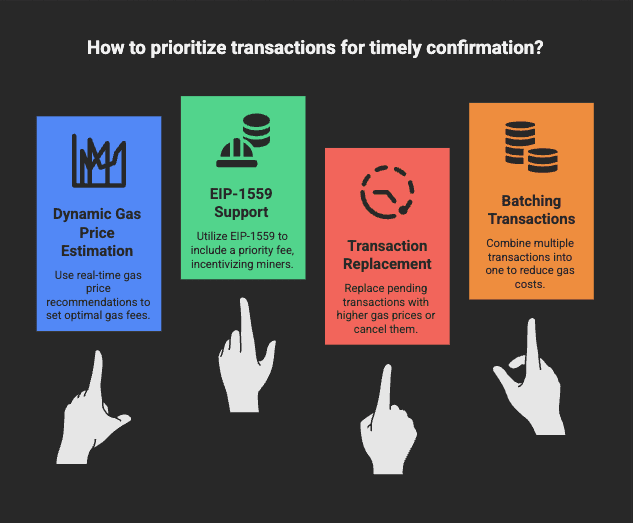
Several strategies can be employed to prioritize transactions and increase the likelihood of timely confirmation:
Dynamic Gas Price Estimation: Use tools and APIs that provide real-time gas price recommendations based on current network conditions. Many wallets and Web3 libraries offer this functionality.
EIP-1559 Support: Ethereum's EIP-1559 introduces a base fee that is burned and a priority fee (tip) that goes to the miner. Wallets and applications should support EIP-1559 to allow users to specify a priority fee to incentivize miners.
Transaction Replacement (Speed Up/Cancel): If a transaction is pending for too long, it can be replaced with a new transaction with a higher gas price. This is typically done by sending a new transaction with the same nonce as the pending transaction but with a higher gas price. Some wallets also offer a "cancel" feature, which sends a transaction to transfer the funds back to the sender's address.
Batching Transactions: For applications that require multiple transactions, batching them into a single transaction can reduce the overall gas cost and improve efficiency. This can be achieved using smart contracts that allow multiple operations to be performed in a single transaction.
Challenges and Considerations
Transaction broadcasting can face several challenges:
Network Congestion: During periods of high demand, the network can become congested, leading to transaction delays and increased gas prices.
Transaction Dropping: If a transaction remains unconfirmed for an extended period, nodes may drop it from their mempool to free up resources.
Frontrunning: In decentralized exchanges (DEXs) and other applications, malicious actors can monitor the mempool for pending transactions and execute their own transactions ahead of them to profit from price movements.
MEV (Miner Extractable Value): MEV refers to the profit that miners/validators can extract by reordering, including, or excluding transactions in a block. This can lead to unpredictable transaction execution and increased costs for users.

Conclusion
Transaction broadcasting is a fundamental process in Web3, enabling users to interact with decentralized applications and transfer value on the blockchain. Understanding the intricacies of this process, including the role of gas fees, transaction prioritization strategies, and potential challenges, is crucial for developers and users alike. As the Web3 ecosystem evolves, new solutions and technologies are being developed to improve transaction efficiency, reduce costs, and enhance the overall user experience.